Dreaming about a marina-front home in Hawaii Kai? The view is a big draw, but the smartest buyers know this kind of purchase is about much more than scenery. If you want the lifestyle, the boat access, and the long-term value that come with waterfront ownership, you need to look closely at permits, flood exposure, shoreline rules, and ongoing maintenance. Let’s dive in.
Why Hawaii Kai Marina Homes Stand Apart
A marina-front home in Hawaii Kai offers a different ownership experience than a typical inland property. You are not just buying a house near the water. You are buying into an active coastal setting where access, upkeep, and regulations all matter.
Nearby Maunalua Bay helps show why. The Maunalua Bay Boat Ramp includes two ramps and a loading dock, and the State of Hawaii allows anchoring there only by permit. In 2026, the Department of Land and Natural Resources completed improvement work that included maintenance dredging, seawall repairs, and erosion-reduction structures, which is a useful reminder that shoreline condition and water access need regular attention.
Start With Boating Access
If your goal is to keep a boat at or near your property, usable access should be one of your first questions. A beautiful lot does not automatically mean easy day-to-day boating. Depth, channel condition, and how the shoreline has been maintained can directly affect how practical the property is.
State boating rules also shape the experience. Hawaii limits speed to slow-no-wake within 200 feet of any shoreline, dock, launch ramp, swimmer, anchored vessel, or similar area. For you as a buyer, that can affect both how you operate on the water and how much wake reaches the property over time.
Review Dock and Shoreline Improvements Carefully
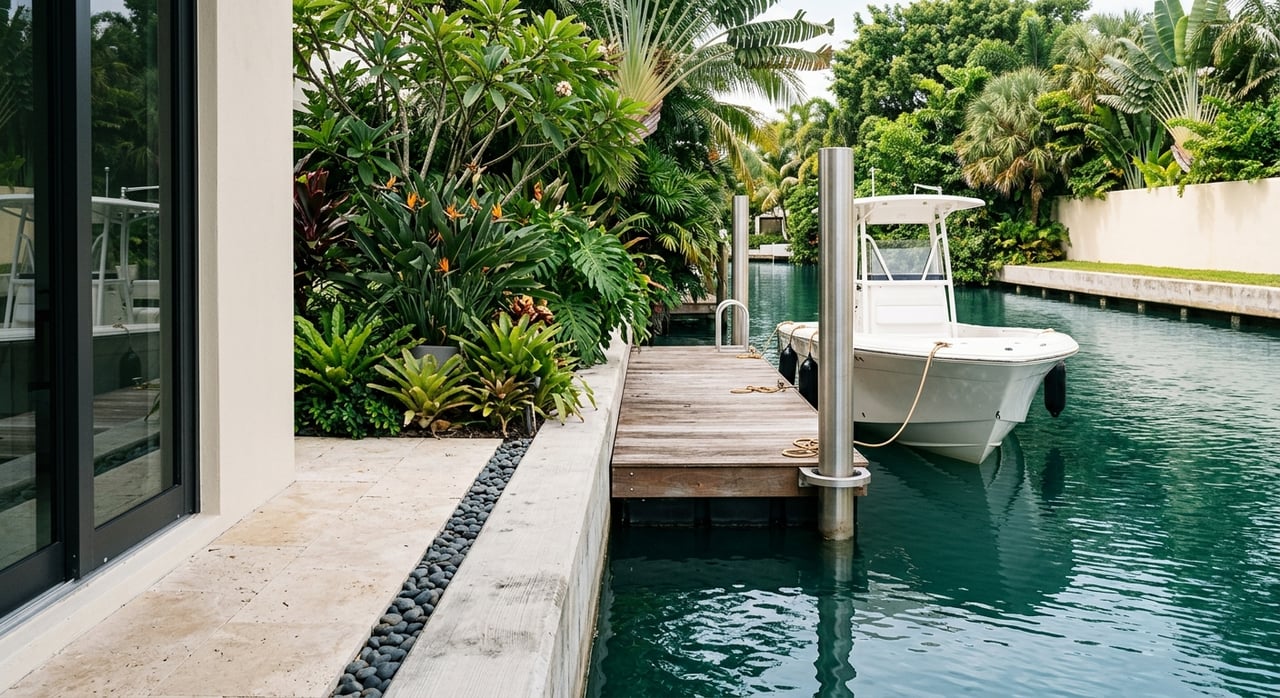
With marina-front property, a dock, lift, or seawall should never be treated as a simple visual feature. These are due diligence items. You want to confirm what exists, whether it was properly documented, and whether future repair or replacement may be possible under current rules.
Honolulu’s shoreline-setback code is a major part of that review. Before construction begins, the shoreline and shoreline setback line generally must be identified on the ground by a licensed surveyor. The code also generally prohibits structures and activities within the shoreline setback area unless a narrow exception applies.
What the setback rules can mean for you
Some shoreline-dependent facilities, including boating and other water-related recreational facilities, may qualify for a shoreline setback variance. The code also says that reconstructing a nonconforming structure within the setback area requires a variance. In practical terms, that means an existing improvement may not be as easy to rebuild or modify as a buyer assumes.
This is especially important when a home’s value is closely tied to its waterfront setup. If the dock, lift, seawall, or prior shoreline work is central to your plans, you should verify whether those features were permitted and whether they remain supportable under current Honolulu rules.
Questions to ask about waterfront structures
When you tour a marina-front home, it helps to ask direct questions early. A few key ones include:
- Is the dock right deeded, leased, or governed by an association?
- When were the dock, pilings, seawall, lift, and related hardware last inspected or repaired?
- Has any shoreline work required a variance, permit, or a surveyor-marked setback line?
- Are there records for prior repairs or modifications?
Public Facilities May Matter Too
Not every boating plan depends only on a private dock. Some owners also use state launch ramps, mooring areas, or other public boating facilities. If that is part of your plan, state rules become part of the ownership picture.
According to DLNR, using harbor facilities, including boat launching ramps, requires a use permit. The Harbor Tenant Handbook also explains that state mooring permits can carry insurance requirements and other permit-specific conditions. If you expect to rely on public facilities, it is wise to understand those rules before you buy.
View and Privacy Are Lot Specific
The phrase “marina front” can sound simple, but the actual living experience can vary a lot from one property to another. Your view, privacy, and day-to-day enjoyment will depend on the lot’s orientation, the width of the waterway, the location of the dock, and what sits across from you.
Honolulu’s shoreline-setback rules are designed in part to protect public access, public views, and open space. That does not tell you exactly what every neighboring property may do in the future, but it does mean that waterfront development is not unlimited. For buyers, the takeaway is clear: evaluate the setting carefully instead of relying only on listing language.
Water use affects the feel of the property
Maunalua Bay is a regulated shared-use environment. DLNR’s ORMA mapping identifies special nearshore zones and regulations in the bay, including areas relevant to activities such as recreational jet skis and commercial ocean uses.
There are also fisheries management rules in effect in Maunalua Bay, including restrictions on the take or possession of certain species and limits on nighttime dive spearfishing. For you, that means a marina-front home is connected to an active and regulated coastal area, not a fully private water space.
Expect More Ongoing Maintenance
Salt air is tough on homes. Compared with inland properties, marina-front homes typically need closer attention to exterior materials and systems. Hardware, railings, dock fittings, fasteners, paint, seals, and drainage can all feel the impact of a more corrosive environment.
NOAA notes that increased salt exposure can call for corrosion-resistant elements and more frequent maintenance schedules. In real life, that means you should budget for upkeep as a normal part of ownership, not as an occasional surprise.
Ask for maintenance history
A well-maintained waterfront home can still be a great purchase. The key is understanding what has been done and what may be coming next. During showings and inspections, ask what items have historically been the biggest cost drivers on that lot or within that subdivision.
This question can help you look past surface-level appeal. A home may show beautifully while still carrying future costs tied to dock hardware, seawall wear, drainage, or exterior corrosion.
Check Flood Risk Early
Flood review should happen during your offer and inspection period, not after you have mentally moved in. Waterfront homes can have very different risk profiles, even within the same broad area. You should verify the property’s flood zone instead of assuming every marina-front lot is the same.
FEMA defines coastal flooding as inundation from high or rising tides or storm surge. Flood insurance is often a major part of the conversation because most homeowners insurance policies do not cover flood damage. If the property is in a Special Flood Hazard Area and the loan is government-backed, flood insurance is required, and some lenders may also require it outside high-risk zones.
Why an elevation certificate matters
If a property has an elevation certificate on file, that document can be very useful. FEMA says an elevation certificate shows a building’s height relative to expected flood levels, and it may help reduce flood insurance cost when the property meets local flood-safety requirements.
For a marina-front purchase, this can be just as important as reviewing the roof or plumbing. It helps you better understand both the risk and the likely insurance picture before you close.
A Smart Buyer’s Hawaii Kai Checklist
If you are serious about buying a marina-front home in Hawaii Kai, focus on the issues that affect real ownership. A practical review should include:
- Boat access and channel usability
- Dock, lift, seawall, and shoreline documentation
- Shoreline setback and variance history
- Flood zone status and insurance needs
- Elevation certificate availability
- Public launch or mooring permit requirements, if relevant
- Past and expected maintenance costs
- Any scheduled dredging, ramp, or shoreline work that could affect access
Why Local Guidance Matters
A marina-front purchase often looks straightforward at first glance, but the details can shape your ownership experience for years. Rules around shoreline setbacks, waterfront improvements, flood exposure, and boating access all deserve careful review before you commit.
That is where a local, detail-oriented approach matters. If you want help evaluating Hawaii Kai waterfront property with a practical eye toward inspections, permits, and long-term usability, Richard DeGutis can help you navigate the process with clear guidance and personalized support.
FAQs
What makes buying a marina-front home in Hawaii Kai different from buying an inland home?
- A marina-front home involves extra due diligence around boating access, shoreline improvements, flood exposure, insurance, and salt-air maintenance.
What should you verify about a dock or seawall at a Hawaii Kai marina-front property?
- You should confirm whether the dock, lift, seawall, or related shoreline work was documented, permitted, inspected, and still supportable under current Honolulu shoreline rules.
Do Honolulu shoreline-setback rules affect Hawaii Kai marina-front homes?
- Yes. Honolulu’s shoreline-setback code can affect what may be built, rebuilt, repaired, or modified near the shoreline, and some work may require a variance.
Do you need flood insurance for a marina-front home in Hawaii Kai?
- It depends on the property’s flood zone and the lender, but if the home is in a Special Flood Hazard Area and the loan is government-backed, flood insurance is required.
Why is an elevation certificate important when buying a Hawaii Kai waterfront home?
- An elevation certificate can help show the home’s height relative to expected flood levels and may help clarify insurance costs and flood risk.
What maintenance issues are common with marina-front homes in Hawaii Kai?
- Buyers should pay close attention to corrosion-related wear on exterior hardware, railings, dock fittings, fasteners, paint, seals, and drainage systems.
Can Hawaii Kai marina-front owners rely on public boating facilities in Maunalua Bay?
- They may be able to, but use of state harbor facilities such as launching ramps requires a permit, and mooring permits can include insurance and other conditions.