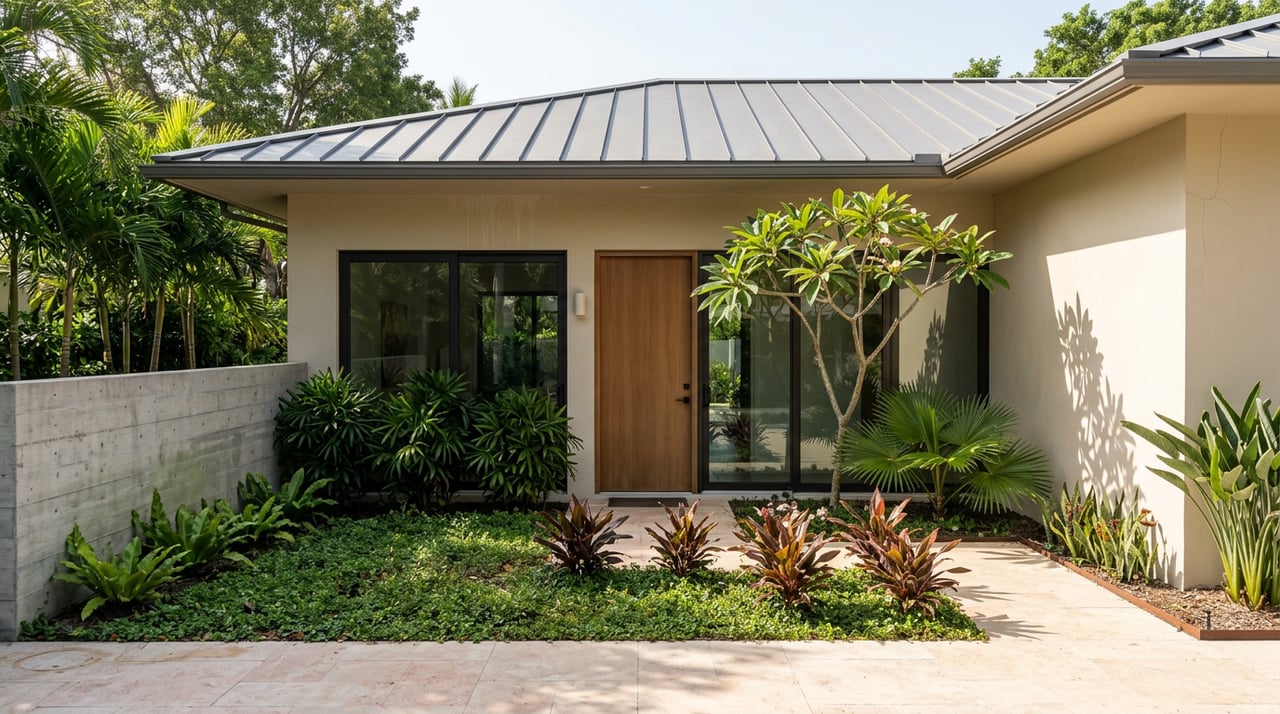
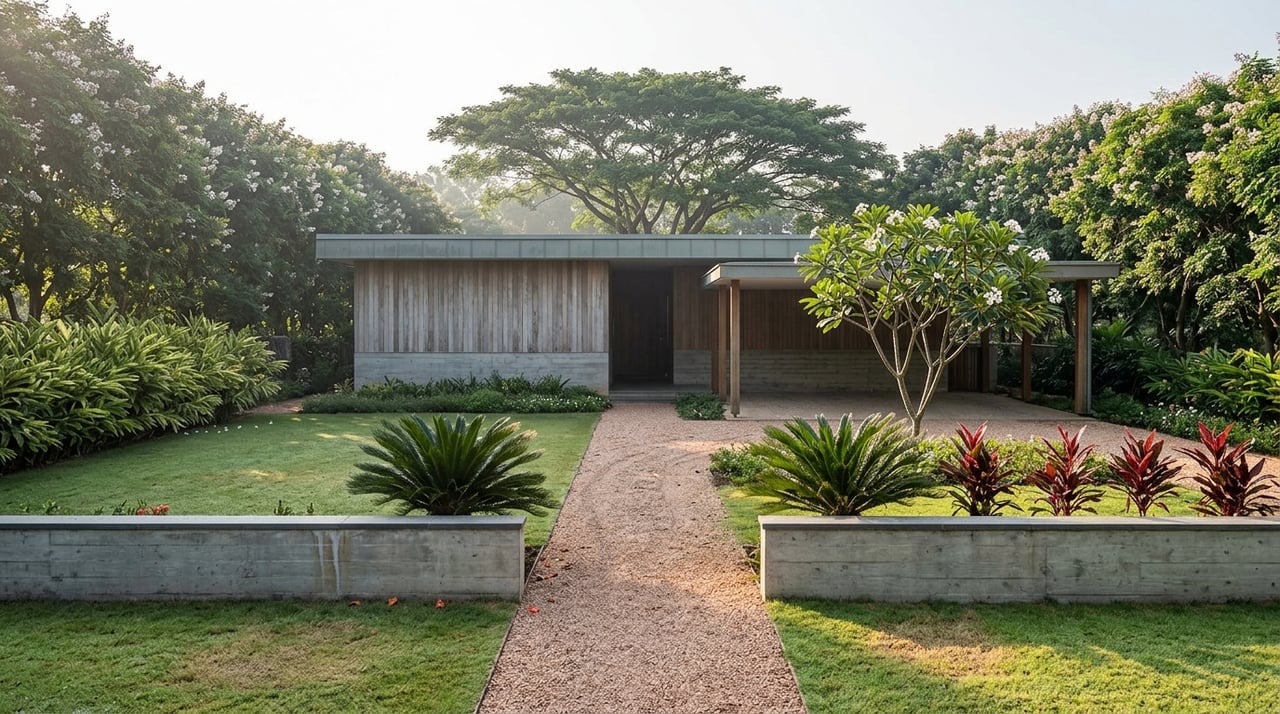
North Shore listings this summer include a turnkey cottage near Haleiwa's main strip, the kind of house a conventional lender treats as ordinary residential collateral, and a unit inside a five-parcel Condominium Property Regime in Kahuku, sitting on Agricultural-2 zoned land, where the house exists legally only because it serves a working farm.
Both show up in the same median. Neither buyer is comparing apples to apples, and most portals will not tell you why.
If you've been watching the North Shore's numbers while comparing it to Kailua, Kaneohe, or Hawaii Kai, this matters more than it sounds. The median price you see blends two products that behave completely differently once you try to finance, insure, or resell them. Understanding the split is the difference between knowing what you're actually buying and finding out at underwriting.
The State Already Flagged This
This isn't a theory an agent invented to sound clever. In 2019, the Hawaii legislature passed Act 278, directing the state Office of Planning to study exactly this pattern on Oahu's agricultural lands. The resulting study examined how subdivision and CPR structures were being used in the state's Agricultural District to create what amounts to small-lot, non-farm residential development, dressed up as farmland.
That's not a small corner of the island. Oahu has roughly 120,790 acres zoned Agricultural District, about 31.5 percent of all land on the island, more than the Urban District's 27.2 percent. A meaningful share of that acreage sits inside the North Shore's boundaries, from Mokuleia through Kahuku, which means the zoning question isn't an edge case here. It's baked into a large share of what gets marketed as "North Shore real estate."
Two North Shores, Compared
The gap between the two products shows up at almost every stage of ownership.
| Fee-Simple, Urban-Zoned Home | AG-Zoned CPR "Farm Dwelling" | |
|---|---|---|
| What you legally own | The house and the land beneath it, no use restriction | A unit within a shared parcel; the house exists as an accessory to agriculture |
| Minimum lot context | Standard residential lot sizes apply | AG-1 requires 5 acres minimum, AG-2 requires 2 acres minimum |
| Building the house | By-right, standard permitting | Requires a farm plan establishing agricultural use before a building permit issues |
| Future subdivision | Governed by normal county subdivision rules | Often restricted or barred outright, especially on Important Agricultural Lands |
| Financing | Standard conventional mortgage products | Lenders scrutinize CPR status; co-op structures are harder still to finance |
| Long-term use rights | Tied to the property, not the owner's occupation | Tied to demonstrated farm income and use, subject to state and county review |
That right-hand column isn't a hypothetical. It describes real, currently listed North Shore parcels.
What "Farm Dwelling" Actually Requires
Under Hawaii's agricultural district rules, a house on AG land has to function as an accessory use to farming, not the other way around. County practice generally requires that more than half the lot be devoted to agricultural use before a building permit for the dwelling is issued, and the property owner has to be able to show the county a farm plan that supports that use.
You can see the pattern across current North Shore inventory. Kahuku's Marconi Point Development markets AG-2 zoned parcels inside a Condominium Property Regime explicitly built around agricultural land use. Kahuku Maluhia Estates does the same across five CPR parcels on a hillside off Kamehameha Highway. Laukiha'a Farms offers 5.049-acre AG-1 lots, again structured as a CPR, again marketed with the same "farming, cultivation, and sustainable land-use" language.
None of that language is wrong. It's just doing double duty. It describes a legitimate agricultural use case, and it also functions as the marketing hook that makes a farm parcel read like a residential listing to a buyer who isn't looking for the difference.
The CPR Wrapper Doesn't Change the Zoning
A Condominium Property Regime lets a single parcel get divided into separately saleable units without going through a traditional subdivision, which is exactly why it shows up so often on agricultural land here. It's a faster path to market than platting new residential lots.
What a CPR does not do is change the underlying zoning. The farm dwelling rules, the agricultural-use requirement, the accessory-use test, all of it still applies to each unit inside the CPR the same way it would apply to the whole parcel. Buying "into" a CPR doesn't buy your way out of the Agricultural District's rules.
That distinction matters even more on land carrying an Important Agricultural Lands designation, a state overlay meant to permanently protect the highest-quality farmland. Waialua Farm, a 152-acre CPR on IAL-designated ground, is a current example. On IAL parcels, state law caps total farm dwelling development at 5 percent of the land or 50 acres, whichever is smaller, and it explicitly prohibits residential subdivision of the land altogether. If a listing mentions IAL, that's not a footnote. It's a ceiling on what the property can ever become.
A "North Shore home" can mean a turnkey cottage two blocks from Haleiwa town, or a legal accessory structure on a working farm parcel that a bank may refuse to touch as ordinary residential collateral. The median price does not tell you which one you're looking at.
Why Lenders Treat These Differently
Fee-simple ownership of AG-zoned land typically supports one house or farm dwelling, and lenders generally understand how to underwrite that. Once you introduce a CPR wrapper, or worse, a cooperative ownership structure, the underwriting gets harder. Cooperative ownership in particular tends to run into more financing resistance than CPR ownership, because the buyer isn't purchasing the land itself, just a membership interest tied to an assigned-use area.
This is the part that catches buyers who assumed a CPR unit would behave like a condo. It doesn't. The lender still has to evaluate the parcel's agricultural status, the farm plan on file, and whether the specific unit's use rights are secure enough to serve as collateral. That review can slow a purchase or kill the loan entirely, well after a buyer has already fallen for the acreage and the view.
Enforcement Is Tightening, Not Loosening
If you're weighing whether any of this is still a live risk in 2026, the direction of travel says yes. Honolulu's Land Use Ordinance now treats farm worker housing as a discretionary use rather than a by-right one, meaning it requires a Conditional Use Permit, a longer and less certain approval path than what used to apply. That's a meaningful tightening, and it lands squarely on the same category of property Act 278 was written to study in the first place.
Put together, the state flagged the pattern in 2019, studied it through 2020, and the county is still narrowing the path for exactly this kind of dwelling in 2026. That's not a closed chapter. It's an active one.
What This Means for Your Number
As of late July 2026, active North Shore listings carried a median list price around $1.6 million and averaged roughly $1,316 per square foot, with the typical home sitting on the market for well over 100 days. A separate snapshot of the North Shore neighborhood within Waialua put the average sale price near $1.43 million, up about 16 percent year over year, with homes typically taking closer to 71 days to sell.
Those numbers are real, but they're an average of two different products with two different risk profiles. A fee-simple home in Haleiwa town and a CPR farm dwelling in Kahuku both feed the same statistic, and only one of them behaves like the residential property most buyers picture when they read "North Shore median price."
If you're comparing the North Shore to another Oahu neighborhood on price alone, ask a more specific question before you run the comparison: is this parcel in the Agricultural District, is it structured as a CPR, and does a farm plan exist on file. Those three answers will tell you more about what you're actually buying than the headline number ever will.
FAQ
Can I get a standard 30-year mortgage on an AG-zoned CPR lot? It depends on the lender and the specific unit's documentation. Some conventional lenders will finance CPR units on agricultural land if the farm plan and CPR declaration are in order, but expect more scrutiny and a longer underwriting timeline than a standard residential purchase.
Does a hobby garden satisfy the farm dwelling requirement? State law ties the dwelling to demonstrated agricultural income for the household occupying it, not casual use. The threshold for what counts is determined case by case through the farm plan process, so this is a question for the county planning department and your attorney before you rely on any assumption.
Is a CPR the same as a homeowners association? No. A CPR is an ownership structure that divides a parcel into separately transferable units. It governs title and shared elements, not the zoning rules that still apply to each unit underneath it.
What happens if the agricultural use requirement isn't being met? Enforcement varies, but the exposure is real, particularly on land with an Important Agricultural Lands designation, where the state has built in explicit limits on how much of the parcel can carry a dwelling at all.
If you're weighing a North Shore purchase against another part of Oahu and want someone to pull the zoning and CPR status on a specific listing before you fall for the acreage, that's exactly the kind of due diligence Golden Pineapple Group handles for buyers every week. Let's Connect.