If you live on the windward side, you know how fast a passing shower can turn into a backyard stream. In Kāneʻohe, that mix of frequent rain and steep slopes makes drainage more than a cosmetic issue. You want a yard that stays usable, a hillside that stays put, and peace of mind when the forecast turns. This guide gives you practical steps, permit basics, and maintenance tips tailored to Kāneʻohe so you can prevent damage and plan smarter. Let’s dive in.
Why drainage is different in Kāneʻohe
Windward Oʻahu sits below the Koʻolau Range, where trade winds wring out frequent showers and short, intense bursts of rain. Research on Oʻahu’s rainfall patterns explains why valleys and foothills like Kāneʻohe see higher rainfall than leeward areas. The result is quick runoff on slopes, faster erosion, and a higher chance of shallow soil failures when hillsides get saturated.
Flood risk mapping is also evolving. FEMA released preliminary flood map updates for Honolulu County in March 2025. If your property is near a stream or gulch, reviewing those maps can help you plan improvements and insurance.
Common yard and hillside problems
Warning signs to watch
- Narrow rills or small gullies forming after storms, with exposed roots or sediment piling at the bottom of the yard.
- Persistent wet spots, new turf or pavement cracks, or small slumps after days of rain.
- Gutters, downspouts, or yard drains that clog and overflow during heavy showers.
What usually causes the issues
- New hardscape like driveways or patios that speed up runoff.
- Removing deep‑rooted landscaping on slopes, which weakens the topsoil.
- Gutters and drains sized for a light shower, not a windward downpour.
Practical fixes that work
Every site is different, but you can use a simple playbook: reduce runoff at the source, slow and spread flow, collect and move water safely, and stabilize soils.
Keep water where it falls
- Preserve or replant deep‑rooted groundcovers, shrubs, and trees on slopes. Healthy vegetation protects soil and boosts infiltration. Local extension resources offer practical erosion‑control planting ideas, so use plant lists that fit Hawaiʻi conditions. CTAHR’s erosion control publications are a helpful starting point.
- Cover bare soil with mulch and add compost where appropriate to speed plant establishment and cut surface erosion.
Slow and spread flow
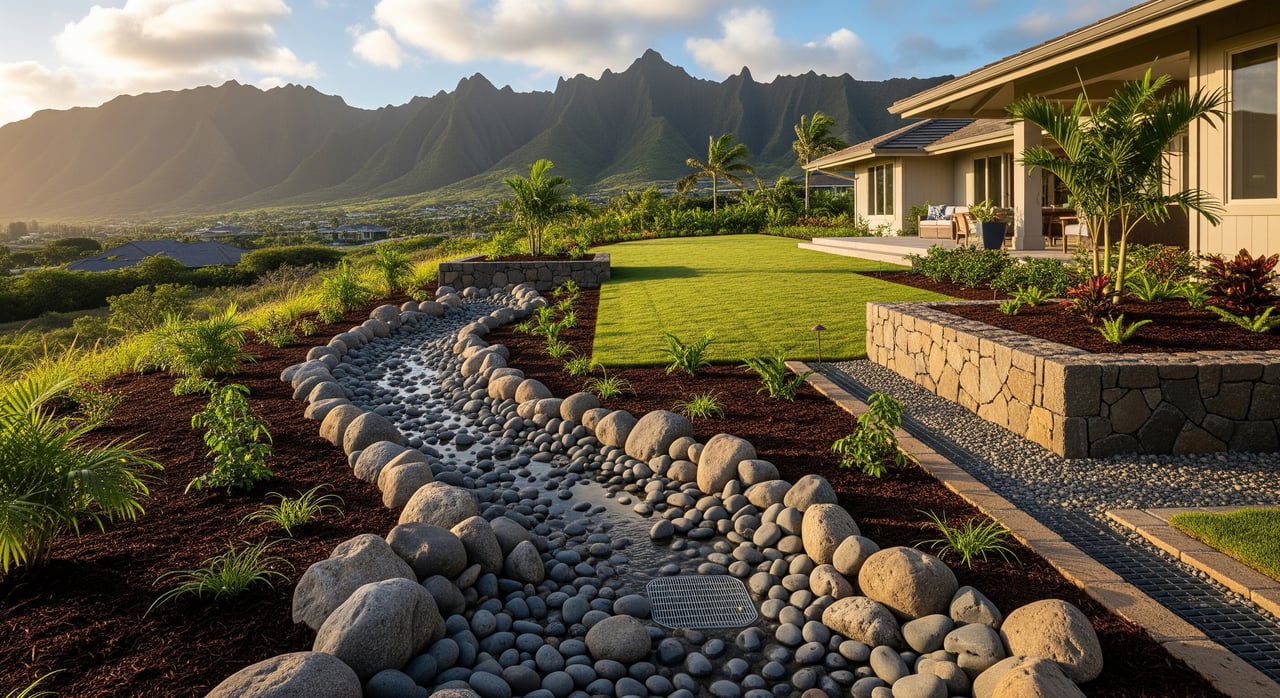
- Shape shallow, vegetated swales to slow water and guide it to a safe area. At the outlet, let the flow spread across a stable, vegetated surface instead of concentrating down a slope.
- On flatter areas, consider a small rain garden to capture roof runoff. Always plan a safe overflow route for big storms.
Collect and move water safely
- Route downspouts into rock‑lined trenches, drywells, or cisterns instead of letting water shoot onto a slope.
- Subsurface French drains or perforated pipe behind retaining walls can relieve water pressure and intercept seepage. These features must drain to a legal outlet and be sized correctly.
- If you plan to connect to a public storm drain, review the City’s rules first. The Civil Engineering Branch oversees private drain connections and dewatering. See the City’s Civil Engineering guidance.
Stabilize slopes with care
- Small terraces or grade breaks can tame steep yard sections and create planting benches.
- Retaining walls need proper drainage details like weep holes and subdrains to avoid trapped water that can destabilize soil. For larger walls or complex sites, consult a licensed engineer. For permit triggers that apply to walls and grading, see the City’s grading permit page.
Permits, rules, and neighbor impacts
- Grading permits: You will likely need a permit if you excavate or fill more than 3 feet, move more than 50 cubic yards of soil, or redirect surface runoff relative to neighboring properties. Review the City’s grading permit criteria before you start.
- Building permit stormwater plans: Some projects require submittals like an ESCP, a Residential Storm Water Management Plan, or Post‑Construction BMPs. The City explains the review process and checklists on its Storm Water Quality page.
- State construction stormwater permits: If your project disturbs 1 acre or more, or is part of a larger plan that totals 1 acre or more, you may need NPDES coverage from the Hawaiʻi DOH Clean Water Branch. See the NPDES overview and application guidance.
- Neighbor drainage disputes: The City generally treats private runoff disputes as civil matters. Avoid redirecting concentrated flow onto others. Permit review helps catch problems before they start.
Maintenance and a quick checklist
Routine maintenance
- Clear gutters, downspouts, and yard drains before the wet season and after every major storm. Many backups start with a handful of leaves.
- After heavy rain, walk your slopes. Look for new rills, soft spots, surface cracks, bulging at the toe, or seepage.
- Keep vegetation healthy. Patch bare areas quickly with appropriate groundcover and mulch. CTAHR’s erosion control resources can guide plant selection.
Before you dig
- Will you change grades by more than 3 feet, move more than 50 cubic yards, or redirect runoff? If yes, review the City’s grading permit rules.
- Will your site disturbance reach 1 acre or more, alone or as part of a larger plan? If yes, check Hawaiʻi DOH NPDES thresholds.
- Will any runoff connect to a public storm drain or a stream? If yes, contact the City’s Civil Engineering Branch about private drain connections.
When to call a pro
Call a licensed geotechnical or civil engineer if you see signs of slope movement, repeated seepage, or new cracking after storms. Bring in an engineer for retaining walls over a few feet, major regrading, or any design that could change where water leaves your property. Early advice usually costs less than emergency repairs.
Ready to plan your next step with confidence? If you are buying, selling, or improving a property in Kāneʻohe, connect with a local advisor who blends construction know‑how with boutique service. Reach out to Richard DeGutis to talk through drainage, permitting, and property strategy.
FAQs
Do I need a grading permit for yard work in Kāneʻohe?
- You likely do if you excavate or fill more than 3 feet, move more than 50 cubic yards, or redirect surface runoff relative to neighbors; review the City’s criteria on the grading permit page.
Can I tie my downspouts into a city storm drain in Kāneʻohe?
- Private connections to the municipal storm system require City review and authorization; start with the Civil Engineering Branch’s private drain connection guidance.
What are clear signs of slope instability on windward Oʻahu yards?
- Watch for persistent wet spots, new surface cracks, bulging at the slope toe, and small slumps after multi‑day rain, which local studies link to shallow, rainfall‑triggered failures; see Hawaiʻi research on slope behavior in this UH resource.
How do the new FEMA flood maps affect Kāneʻohe homeowners?
- FEMA’s preliminary March 2025 updates may change flood risk designations and insurance expectations for some properties; review the Honolulu County flood map update if you are near streams or gulches.
When does a small project need a Hawaiʻi NPDES permit?
- Projects that disturb 1 acre or more, or that are part of a larger common plan totaling 1 acre or more, generally need coverage; see DOH’s NPDES permit overview.